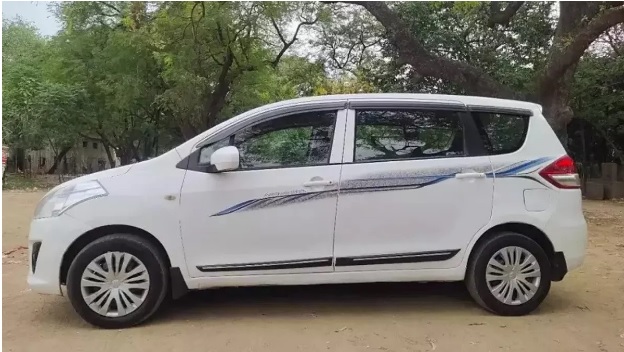
An second hand Ertiga is popular because it gives Indian families three-row practicality without the bulk and cost of a larger SUV. It suits school runs, office travel, weekend trips, airport drops, and parents who often travel with children or elderly family members. The right used Ertiga gives you flexible seating, manageable fuel bills, and easier parking than many bigger seven-seaters.
Do not buy one only because it has seven seats. Check how the car was used. Many Ertigas serve as family cars, but some also run as commercial vehicles or high-mileage people movers. A careful inspection will tell you whether the car has lived an easy life or a hard one.
What makes the Ertiga practical
The Ertiga’s biggest strength is usable space. The first two rows are comfortable for daily use, and the third row helps when extra passengers join. You can fold seats when you need luggage room. This flexibility makes it useful for families that cannot manage with a regular hatchback or sedan anymore.
It also feels less intimidating than many large vehicles. The driving position is friendly, the steering is light enough for urban use, and visibility is decent. For buyers moving from a smaller car, this matters more than brochure numbers. A car that feels easy to use every day brings more value than a larger model that creates parking stress.
Petrol, CNG, manual or automatic: choose by use
A petrol ertiga second hand suits buyers who drive moderate distances and want quieter performance. A factory CNG version can work well for families with high monthly running, but you must inspect the CNG kit, service records, and cylinder validity. Do not buy an aftermarket CNG conversion unless a trusted technician checks the fitting and paperwork.
Manual variants usually cost less and are easier to evaluate. Automatic variants appeal to city families, especially in traffic-heavy routes, but the gearbox must be tested in slow traffic and open roads. It should shift cleanly and should not hesitate badly. If you feel jerks, delay, or warning lights, do not ignore them.
How to inspect a used Ertiga properly
Start from the rear. Check the third-row seats, folding mechanism, boot floor, spare wheel area, and rear AC vents if present. Family cars often carry luggage, school bags, water cans, and sometimes pets. Look for broken plastics, damp smell, or signs of water entry.
During the test drive, listen for suspension thuds when the car carries more than one person. A people-mover often stresses tyres, brakes, clutch, and suspension more than a small car. Check brake bite, clutch feel, steering return, and whether the vehicle stays composed over bumps. Ask a mechanic to inspect the underbody if the car has run in hilly or rough-road areas.
Also check odometer logic. A seven-year-old family car with very low kilometres may be genuine, but it needs proof. Service bills, tyre dates, insurance history, and general wear should support the reading.
Documents and ownership checks
Confirm RC details, fuel type, seating capacity, insurance validity, PUC, service history, and loan closure status. If the RC shows hypothecation, ask for the lender’s no-objection certificate and ensure removal before or during transfer. The vehicle should not move to your name with unresolved finance confusion.
Check whether the car was privately registered or used commercially. A commercial history is not automatically bad, but it affects price, wear, and insurance understanding. For a personal family purchase, a clean private-use history is usually easier to own.
Budgeting beyond the purchase price
Keep money aside for immediate service after purchase. Replace engine oil, filters, brake fluid if due, wiper blades, and worn tyres. If the car has CNG, schedule a dedicated CNG system inspection. If it is automatic, ask for gearbox-related service history and follow proper maintenance.
Loan planning also matters. A used car loan can reduce upfront pressure, but the EMI should leave room for fuel, insurance, maintenance, parking, and annual expenses. Families often stretch their budget for space and later struggle with running costs. A safer approach is to buy a slightly older clean car rather than an expensive example that forces a tight EMI.
If you’re looking for used automatic cars, you can find many reliable options that offer smooth driving and great value for money. Compare models, check the car’s condition, and choose the one that fits your budget and daily needs.
Buying mistakes families should avoid
Do not finalise the car after sitting only in the front row. Ask your family members to sit in the second and third rows during the test drive. This helps you judge knee room, roof space, AC reach, and entry comfort. A car that looks spacious in photos may feel tight when adults actually sit behind each other.
Also avoid judging the Ertiga only by fuel savings. A cheaper CNG or high-kilometre example can cost more later if the clutch, suspension, tyres, or cooling system needs work. Families should buy the car that feels healthy and safe, not just the car with the lowest asking price.
Before delivery, write down what the seller will repair, replace, or include. Mention spare key, tool kit, insurance papers, transfer timeline, and pending challans in writing. This simple step protects you from arguments after payment.
Conclusion
An Ertiga second hand can be one of the most useful family cars in India when you buy the right example. Shortlist cars with private-use history, clean documents, steady maintenance, and a healthy test drive. Choose the fuel and transmission based on your actual running, not on market hype. A careful buy can serve your family for years without feeling oversized or wasteful.