
TL;DR / Key Takeaways
- Address Preservation: Enables thousands of local devices to share a single public IPv4 address.
- Security Perimeter: Acts as a natural stateful firewall by blocking unsolicited inbound connections from the open internet.
- Core Mechanics: Modifies IP packet headers at the gateway router using dynamic translation tables.
Without address translation technology, the commercial internet would have run out of usable IPv4 space before the turn of the millennium. By allowing an entire private office or residential network to sit behind a single public IP, translation protocols extended the lifespan of 32-bit addressing by decades.
For network engineers and home users alike, understanding how gateways translate private IP requests into public internet traffic is essential for troubleshooting connectivity, port forwarding, and network security.
What Is NAT and How Does It Function?
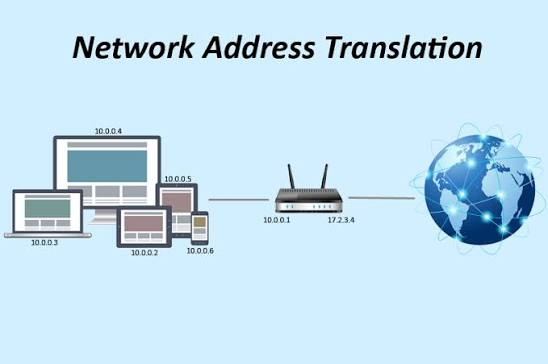
NAT is a networking method that rewrites the source or destination IP addresses inside packet headers while they pass through a routing gateway. It creates a bridge between private local networks and the public internet, mapping non-routable internal IP addresses to a globally routable public address.
When a device on a home or enterprise Wi-Fi network requests a webpage, the local router intercepting the packet replaces the internal IP address with its own public IP address. The router records this mapping in an active translation table, complete with distinct port numbers, ensuring incoming reply packets are routed back to the exact device that requested them.
For those reviewing core networking vocabulary, what NAT stands for, per Full Form Guide is Network Address Translation, which describes the process of modifying network address information in IP packet headers while in transit.
Types of NAT Implementations
Depending on network architecture and security needs, engineers deploy different translation strategies across edge routers and firewalls.
Static NAT (One-to-One Translation)
Static NAT permanently maps a single private IP address to a single dedicated public IP address.
This configuration is primarily used when internal servers—such as web, mail, or FTP servers—must remain directly accessible from the public internet using a consistent IP.
Dynamic NAT and Port Address Translation (PAT)
Dynamic NAT assigns private IPs to public IPs from a pool of available addresses on a first-come, first-served basis.
More common is Port Address Translation (PAT), also known as NAT overload, which maps thousands of internal private IP addresses to a single public IP address by assigning unique source port numbers to each session.
| NAT Variant | Translation Ratio | Primary Real-World Use Case |
| Static NAT | 1 Private : 1 Public | Hosting internal web/mail servers facing the internet. |
| Dynamic NAT | Many Private : Pool of Public | Enterprise egress traffic with multiple assigned public IPs. |
| PAT (NAT Overload) | Many Private : 1 Public | Standard home Wi-Fi routers and small business networks. |
Why NAT Matters for Network Security and Telecommunications
Beyond address conservation, NAT plays a critical role in edge security and service provider infrastructure.
Obfuscation and Inbound Shielding
NAT provides built-in perimeter defense by concealing private IP topologies from external internet scanners.
Because devices inside a private network use non-routable RFC 1918 addresses (such as 192.168.x.x or 10.x.x.x), outside hosts cannot initiate direct connections to internal devices unless explicit port forwarding rules exist.
Carrier-Grade NAT (CGNAT) in Telecom Networks
Mobile operators and internet service providers deploy Carrier-Grade NAT (CGNAT) to pool public IPv4 addresses across thousands of cellular subscribers.
While CGNAT conserves provider IPv4 space, it can introduce challenges for peer-to-peer applications, online gaming, and self-hosted VPN servers due to double NAT scenarios.
Frequently Asked Questions (FAQ)
Is NAT still necessary with IPv6?
Because IPv6 provides an virtually unlimited address space, every device can have a unique public address, making traditional NAT for address preservation unnecessary.
What is a “Double NAT” issue?
Double NAT occurs when two routers on the same network perform address translation sequentially, which can break port forwarding, VoIP calls, and online gaming sessions.
What is the difference between Port Forwarding and NAT?
Port forwarding is a custom NAT rule that manually directs incoming traffic on a specific port to a designated internal IP address.
Conclusion
Network Address Translation remains one of the most vital protocols in modern networking architecture. By conserving IPv4 address space, masking internal network structures, and managing session routing via PAT, NAT bridges private local area networks seamlessly to the broader global internet.