Modern buildings need materials that can balance practical performance with visual appeal. From balconies and staircases to facades, partitions, and exterior structures, architectural elements must withstand everyday use while complementing the overall design. Aluminium has become a popular choice for these applications because it is lightweight, durable, corrosion resistant, and adaptable to different shapes and finishes.
The finishing process plays an equally important role in determining how an aluminium component performs and looks over time. For applications that require an attractive appearance alongside surface protection, powder coated railings offer a practical option for residential, commercial, and industrial spaces.
Why Aluminium Works Well for Architectural Features
Aluminium combines several properties that make it suitable for modern construction. Its relatively low weight makes components easier to transport and install, while its strength allows it to be used in a variety of structural and decorative applications.
Another important advantage is its resistance to corrosion. Aluminium naturally develops a protective oxide layer when exposed to air, helping it withstand many environmental conditions. Additional surface treatments can further enhance its appearance and protection.
The material can also be extruded into a wide range of profiles. This allows manufacturers to create components suited to different architectural requirements, from simple frames to more complex structural sections.
The Importance of a Suitable Surface Finish
The appearance of an aluminium component can influence the overall visual character of a building. At the same time, exposed components need protection against environmental conditions and regular handling.
Surface finishing can address both requirements. A suitable finish can provide colour and texture while creating an additional protective layer over the aluminium.
Powder coating is particularly useful because it allows aluminium products to be finished in different colours and textures. This gives architects and designers greater flexibility when coordinating railings, frames, doors, windows, partitions, and other elements.
For projects where multiple components are visible together, a consistent finish can also contribute to a more cohesive appearance.
Designing Railings for Function and Appearance
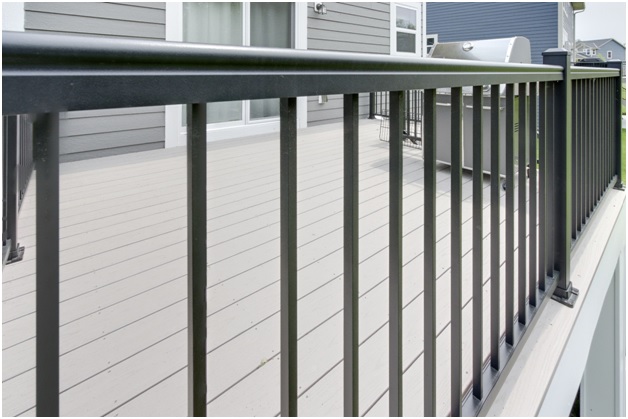
Railings are an important part of many residential and commercial structures. They can provide support and safety around balconies, staircases, terraces, walkways, and other elevated areas.
However, railings are also highly visible. Their shape, colour, and finish can influence the appearance of the surrounding space. Powder coated railings can combine the structural advantages of aluminium with a broad choice of finishes.
Designers can select colours that complement walls, flooring, glass, wood, or other architectural materials. This makes it possible to create anything from subtle, understated railings to stronger visual accents.
The choice of profile is equally important. Depending on the application, railings may require specific dimensions, shapes, wall thicknesses, or connection points. Aluminium extrusion makes it possible to produce profiles suited to these requirements.
How Powder Coating Supports Long-Term Performance
Powder coating involves applying a dry coating material to a prepared metal surface and curing it under controlled conditions. The curing process allows the coating to form a continuous finish over the aluminium.
When properly applied, the coating can help protect the underlying surface from everyday environmental exposure. This can be useful for exterior components that encounter moisture, dust, pollutants, temperature variations, and regular handling.
However, coating performance depends on several factors. Surface preparation, coating selection, application conditions, curing, and quality inspection all influence the final result.
This means that effective finishing requires controlled manufacturing processes rather than simply applying a decorative layer to the finished product.
Creating Different Looks With Aluminium
Contemporary architecture often uses aluminium because it can adapt to different visual styles. Neutral finishes can create a minimal appearance, while darker or more distinctive shades can add contrast to a building.
Powder coating provides considerable flexibility in this regard. Aluminium powder coating can support different colours, textures, and surface appearances depending on the project’s requirements.
This flexibility can be useful when a building uses several aluminium components. Windows, doors, railings, partitions, frames, and decorative structures can be coordinated to create a consistent visual identity.
For commercial properties, the finish may also be selected to complement corporate colours or the broader branding of a space.
Surface Preparation Makes a Difference
Before powder coating begins, the aluminium surface needs to be properly prepared. Dirt, grease, oxidation, and other contaminants can affect coating adhesion and the appearance of the finished component.
Appropriate preparation helps create a clean surface for the coating to bond effectively. The exact preparation requirements can vary depending on the aluminium alloy, product design, environmental conditions, and coating specification.
Manufacturers therefore need to maintain appropriate controls throughout this stage. Proper preparation can contribute significantly to coating consistency and long-term performance.
Applications Beyond Railings
Although architectural railings are an important application, powder-coated aluminium can be used across many other products and structures.
Doors and windows can benefit from durable coloured finishes, while partitions and interior structures can use coated profiles to create coordinated designs. Facade components can also incorporate finished aluminium where appearance and weather exposure are important considerations.
Industrial applications include equipment frames, enclosures, machinery structures, workstations, and other fabricated components. In these situations, the finish can provide both a consistent appearance and an additional surface layer.
The appropriate coating specification should always be selected according to the environment in which the finished component will operate.
The Role of Extrusion in Product Design
Surface finishing is only one stage in producing a quality aluminium component. The extrusion process determines the profile’s basic shape, dimensions, and geometry.
Aluminium extrusion allows manufacturers to produce continuous profiles with different cross-sectional designs. These profiles can subsequently be cut, drilled, machined, assembled, or finished according to their intended use.
For specialised applications, custom extrusion can provide even greater flexibility. Instead of adapting a standard profile to an unusual requirement, manufacturers can develop a profile around the specific design.
This can be useful for projects where particular connection points, dimensions, structural characteristics, or installation requirements need to be incorporated into the aluminium profile itself.
Why Consistency Matters in Large Projects
Large construction and manufacturing projects often require significant quantities of identical aluminium components. In such situations, consistency becomes a major consideration.
Variations in dimensions, coating thickness, colour, or surface appearance can become noticeable when components are installed together. Consistent manufacturing processes and appropriate inspection procedures can help minimise these variations.
This is especially important for architectural applications where finished aluminium remains highly visible. A consistent surface can contribute to a more professional appearance across the completed project.
Choosing the Right Aluminium Solution
Selecting an aluminium component should involve more than considering its appearance. The intended application, environmental exposure, dimensions, structural requirements, installation method, and maintenance expectations should all be evaluated.
The finishing process should also be selected according to the project’s functional and aesthetic requirements. An interior component may require a different approach from an exterior structure exposed to changing weather conditions.
Working with a manufacturer that can manage extrusion, machining, and surface finishing can simplify this process. It allows different production requirements to be considered together rather than handled as completely separate stages.
Conclusion
Modern architectural and industrial spaces increasingly require materials that combine durability with design flexibility. Aluminium meets these expectations through its lightweight construction, corrosion resistance, adaptability, and compatibility with different extrusion and finishing processes.
For balconies, staircases, terraces, walkways, and similar applications, powder coated railings can provide a combination of functionality and visual appeal. Meanwhile, aluminium powder coating gives manufacturers and designers greater freedom to create finishes that suit different environments and architectural styles.
With capabilities across aluminium extrusion, machining, anodising, powder coating, and customised profile development, JM Aluminium supports businesses looking for dependable aluminium solutions for diverse architectural and industrial requirements.