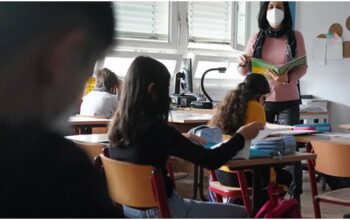

IBDP Mathematics requires students to understand concepts, apply appropriate methods, and solve unfamiliar problems accurately. An IB maths tutor in Dubai can provide structured academic support for learners facing challenging topics.
The curriculum covers areas such as algebra, functions, calculus, statistics, probability, and mathematical modeling. Students must develop more than formula-based knowledge; they need to interpret questions, explain solutions, and apply concepts to different situations. Targeted tutoring can help identify learning gaps, strengthen problem-solving skills, and provide focused examination preparation. Regular practice and feedback can also help learners improve accuracy, manage time effectively, and approach complex mathematical questions with greater confidence.
Building Strong Foundations in IBDP Mathematics
A strong foundation allows students to approach advanced mathematical concepts with greater clarity and confidence.
1. Strengthening Algebraic Skills
Algebra supports many areas of IBDP Mathematics. Students may work with equations, inequalities, sequences, functions, and algebraic expressions throughout the curriculum.
Targeted practice can help learners strengthen basic techniques and understand the reasoning behind different procedures. Regular exercises can improve accuracy, reduce common mistakes, and make algebraic manipulation more efficient during examinations.
2. Understanding Functions
Functions are central to mathematical analysis and can appear in graphs, equations, transformations, and real-world applications. Students need to understand how different functions behave and how their representations connect.
Guided practice can help learners interpret graphs, identify key features, solve equations, and apply functions to unfamiliar problems. This creates a stronger conceptual understanding than relying only on memorized procedures.
3. Developing Calculus Knowledge
Calculus can be challenging because students must connect mathematical procedures with graphical and practical applications. Differentiation and integration involve different techniques and require careful interpretation.
Structured tutoring can break complex concepts into manageable steps. Students can first understand the underlying principles before progressing to applications involving rates of change, optimization, and areas. Practice can also improve confidence with examination-style questions.
Developing Stronger Problem-Solving Skills
Effective mathematical performance requires students to interpret questions, select appropriate methods, and communicate their reasoning clearly.
1. Interpreting Complex Questions
IBDP questions can present information through written scenarios, graphs, tables, or diagrams. Students must identify relevant information and determine what the question requires.
Tutoring can help learners develop a systematic approach by identifying known values, defining variables, selecting relevant concepts, and checking whether the final answer accurately addresses the question.
2. Selecting Suitable Methods
Knowing formulas is not enough if students cannot recognize when to use them. Different questions may require different approaches, even when they involve similar mathematical concepts.
An IB maths tutor in Dubai can provide guided examples that help learners compare methods and understand when particular techniques are appropriate. This encourages reasoning rather than simple memorization.
3. Improving Accuracy
Clear, well-organized solutions can help students reduce calculation errors and communicate their reasoning effectively. Regular feedback can highlight weaknesses in notation, calculations, diagrams, or final answers.
Students can also develop checking habits to determine whether their results are mathematically and logically reasonable.
Strengthening Statistics and Probability Skills
Statistics and probability require students to interpret information, select suitable techniques, and explain results within different contexts. These topics can become challenging when multiple concepts are combined within a single question.
Students may need to understand probability distributions, statistical measures, data representation, correlation, regression, and interpretation. Focused practice can help learners distinguish between related concepts and select appropriate methods with greater confidence. Regular exercises also encourage students to check calculations and explain what their results indicate.
Practical examples can make these topics easier to understand by connecting mathematical calculations with real situations. Working with graphs, datasets, tables, and contextual questions can strengthen both analytical and interpretation skills while helping students approach unfamiliar statistics and probability problems more systematically.
Applying Mathematics to Real Situations
Mathematical modeling encourages students to apply classroom knowledge to practical situations. Questions may involve finance, business, science, populations, measurements, or other real-world contexts.
Students need to translate information into mathematical relationships and interpret the resulting answers. Guided practice can help learners understand how theoretical concepts apply outside standard textbook exercises.
Evaluation is also important. Students may need to consider whether a result is realistic, identify assumptions, or explain limitations within a mathematical model. Developing these skills encourages deeper analytical thinking.
Preparing for IBDP Mathematics Assessments
Strong examination preparation requires more than reading notes. Students benefit from practicing different question formats, reviewing mistakes, and developing effective time-management strategies.
Timed practice can help learners become familiar with examination conditions and understand how to distribute time across questions. Reviewing incorrect answers can identify recurring weaknesses and provide opportunities for improvement.
Regular practice also helps students become more comfortable with unfamiliar questions. This is particularly useful in IBDP Mathematics, where application and reasoning are important components of assessment.
Creating a Consistent Learning Routine
Consistent study helps students strengthen mathematical understanding through regular, focused practice and timely revision.
- Regular Practice: Short study sessions reinforce concepts and improve retention.
- Targeted Exercises: Focused questions help strengthen weaker mathematical skills.
- Difficult Topics: Revisiting challenging concepts can improve clarity and confidence.
- Exam Practice: Exam-style questions build familiarity with assessment formats.
- Identify Gaps: Regular review helps students recognize areas needing improvement.
- Personalized Focus: Additional attention can be given to individual learning needs.
A structured routine helps learners manage their study time effectively, address weaknesses early, and build confidence through steady progress. Combining revision, practice, feedback, and assessment preparation can create a balanced learning approach that supports stronger mathematical performance throughout the IBDP.
Conclusion
IBDP Mathematics requires conceptual understanding, analytical thinking, accurate calculations, and the ability to apply knowledge to unfamiliar situations. Focused academic support can help students strengthen their understanding of difficult topics, improve problem-solving skills, and prepare effectively for assessments.
For students seeking structured academic guidance, IBDP tutoring in Dubai through The Tutoring Center Dubai can support learners across different areas of the IBDP curriculum. Their guidance can help students understand challenging mathematical concepts, practice relevant techniques, improve accuracy, and develop stronger examination skills. With consistent support and focused practice, learners can approach complex questions more confidently while building a stronger mathematical foundation. This structured approach can also encourage better study habits, clearer reasoning, and greater readiness for academic assessments.