
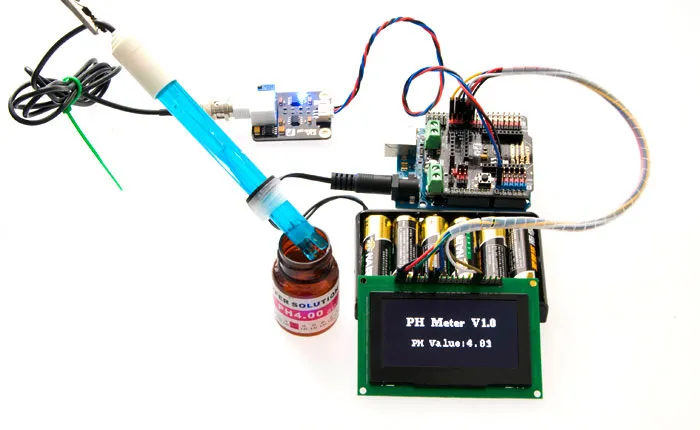
Accurate measurement is one of the most crucial elements in any laboratory environment. Whether conducting research, quality control, or educational experiments, precision determines the reliability and repeatability of results. Among the various scientific tools available today, pH measurement instruments play a vital role in helping scientists better understand chemical behavior, biological reactions, and environmental conditions. This makes the use of specialized sensing equipment essential for consistent and dependable outcomes.
In many laboratory settings, pH levels influence experimental processes and final results. Even slight variations in acidity or alkalinity can affect reaction rates, stability, solubility, and biological activity. Because of this sensitivity, researchers require tools capable of detecting small changes with high accuracy. Modern laboratories rely on advanced technologies that minimize human error and provide real-time insights into ongoing tests and investigations.
A widely used instrument for this purpose is the pH sensor, which measures hydrogen ion concentration to determine the acidity or alkalinity of a solution. Introducing this device into laboratory experiments brings significant advantages that enhance both efficiency and scientific validity.
High Accuracy and Precision
One of the primary benefits of using a pH sensor is its ability to deliver precise and accurate measurements. Traditional methods such as litmus paper or colorimetric indicators depend on visual interpretation, which may be subjective. In contrast, a digital sensor provides exact numerical values, reducing the risk of misinterpretation. This level of precision is particularly important for experiments involving sensitive chemical reactions or biological cultures where pH must remain within a specific range.
Real-Time Monitoring and Data Stability
Laboratory experiments often require ongoing observation. pH changes can occur quickly, influencing the results if not addressed immediately. With a sensor, researchers can continuously monitor pH levels and record data over time. This capability is especially beneficial in titrations, fermentation studies, enzyme reactions, and environmental simulations. Real-time tracking ensures that adjustments can be made promptly to maintain optimal conditions.
Furthermore, digital sensors offer improved stability. Once calibrated, they maintain accuracy over extended periods, reducing the need for repeated measurements and saving valuable time during research.
Enhanced Efficiency and Workflow
Using a pH sensor speeds up laboratory workflows. Instead of manually checking pH with slow or inconsistent methods, researchers can obtain readings instantly. This efficiency allows experiments to progress faster and reduces downtime between tests. Automated sensing also helps streamline multi-step processes, particularly in complex experiments where pH must be checked frequently.
The ability to integrate sensors with data-logging systems further enhances workflow. Recorded measurements can be exported to analysis software, improving the quality and traceability of laboratory documentation. This is essential in research institutions, academic labs, and industrial quality control rooms where accurate records are mandatory.
Improved Safety and Reliability
Chemical handling often involves corrosive or hazardous solutions. Using a sensor minimizes direct contact with these substances, enhancing laboratory safety. Instead of relying on manual sampling, the device allows measurements to be taken through immersion probes or enclosed systems. This reduces exposure risks and supports compliance with laboratory safety protocols.
Reliability is another critical advantage. Laboratory results must be repeatable, and high-quality sensors ensure that measurements remain consistent across multiple tests. This consistency strengthens experimental conclusions and supports peer-reviewed research.
Versatility Across Scientific Disciplines
pH sensors are used in various fields, including chemistry, biology, environmental science, food technology, and pharmaceuticals. Their versatility makes them suitable for analyzing liquids, gels, biological cultures, and even semi-solid samples. Researchers can choose from different types of sensors depending on the nature of their experiments, ensuring compatibility with a wide range of materials.
For example, combination electrodes are common in chemical labs, while ISFET sensors are preferred in biological applications due to their fast response and durability. This adaptability enhances the value of the device across multiple laboratory settings.
Conclusion
The integration of pH sensors into laboratory work brings significant advantages, from improved accuracy and efficiency to enhanced safety and reliability. By providing real-time, precise, and consistent pH measurements, these devices support high-quality scientific outcomes and make complex experiments easier to manage. As research demands continue to evolve, the importance of effective pH monitoring tools remains central to achieving dependable and meaningful laboratory results.