
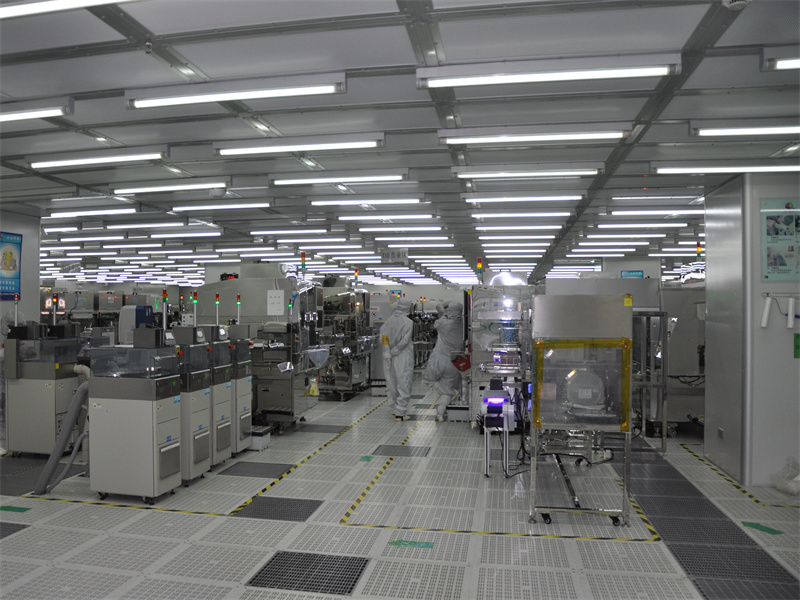
ISO 5 cleanrooms are among the most critical controlled environments in industries such as pharmaceuticals, biotechnology, medical devices, and semiconductor manufacturing. These spaces require extremely low levels of airborne particulate contamination to ensure product safety, quality, and compliance with regulatory standards. Achieving and maintaining ISO 5 conditions involves rigorous monitoring and validation procedures that verify cleanroom performance over time.
Monitoring and validation are not one-time activities; they are continuous processes that help detect deviations, prevent contamination, and ensure that the cleanroom operates within the strict parameters defined by ISO 14644-1 standards. Understanding these procedures is essential for cleanroom operators, quality assurance teams, and facility managers responsible for maintaining compliance and protecting sensitive processes.
Purpose of ISO 5 Cleanroom Monitoring and Validation
The primary goal of cleanroom monitoring and validation is to ensure that environmental conditions remain within the defined limits for ISO 5 classification. This includes controlling airborne particles, airflow patterns, pressure differentials, temperature, and humidity. Monitoring detects early signs of contamination or equipment failure, while validation confirms that the cleanroom design and systems perform as intended under operational conditions.
A comprehensive understanding of cleanroom requirements can be gained by reviewing resources such as the ISO 5 Cleanroom overview, which provides insights into classification standards, typical applications, and the importance of ongoing compliance. These resources are particularly useful for designing monitoring programs and establishing validation protocols that meet regulatory expectations.
Airborne Particle Monitoring
Airborne particle monitoring is a cornerstone of ISO 5 cleanroom validation. Particle counters are used to measure the concentration of particles in various size ranges, with a specific focus on particles 0.5 micrometers or larger, which are critical for ISO 5 classification. Sampling locations are strategically selected to represent different areas of the cleanroom, including critical work zones, high-traffic areas, and supply air outlets.
Continuous or periodic monitoring can be employed depending on operational requirements. Continuous monitoring provides real-time data and early warning of deviations, while periodic testing offers snapshot assessments to confirm ongoing compliance. Data from particle monitoring is analyzed to identify trends, assess system performance, and support corrective actions when necessary.
Airflow and Pressure Validation
Airflow and pressure differentials are essential to maintaining the cleanliness of an ISO 5 cleanroom. Laminar airflow must be validated to ensure that it consistently sweeps particles away from critical areas. Air velocity measurements are taken at multiple points to verify uniformity and adherence to design specifications.
Pressure differentials between the cleanroom and surrounding areas are also monitored and validated. Maintaining a positive pressure relative to adjacent spaces prevents the ingress of contaminated air when doors are opened. Validation procedures include both static and dynamic tests to confirm that pressure cascades are maintained under operational conditions.
Environmental Parameter Monitoring
Temperature and humidity control is another key aspect of cleanroom monitoring. These parameters can affect both product stability and cleanroom performance. Continuous monitoring systems provide real-time measurements and alarms for deviations outside defined ranges. Data is logged for trend analysis and regulatory reporting.
Other environmental parameters, such as airflow filtration efficiency and surface contamination, are also part of the validation process. HEPA or ULPA filter integrity tests ensure that filtration systems are performing as required, while surface sampling may detect microbial contamination or particle accumulation on work surfaces.
Equipment and System Qualification
Validation procedures also extend to cleanroom equipment, including laminar flow hoods, autoclaves, and filling machines. Equipment qualification ensures that each device operates correctly within the ISO 5 environment and does not contribute to contamination. This process typically involves Installation Qualification (IQ), Operational Qualification (OQ), and Performance Qualification (PQ), which verify proper installation, operation, and sustained performance, respectively.
Routine Monitoring and Revalidation
ISO 5 cleanrooms require ongoing monitoring and periodic revalidation to maintain compliance. Routine monitoring includes daily particle counts, environmental parameter logging, and visual inspections of cleanroom conditions. Revalidation is conducted at regular intervals, after major maintenance or modifications, or when process changes occur. This ensures that the cleanroom continues to meet the stringent requirements of ISO 5 classification.
Documentation and Compliance
Accurate documentation is critical in ISO 5 cleanroom monitoring and validation. All monitoring results, validation reports, corrective actions, and equipment maintenance records are carefully maintained. Regulatory agencies, including the FDA and EMA, expect thorough documentation to demonstrate compliance with cleanroom standards and manufacturing guidelines.
Importance of Monitoring and Validation
Proper monitoring and validation of an ISO 5 cleanroom are essential to protect sensitive processes, ensure product quality, and maintain regulatory compliance. By consistently tracking airborne particles, airflow, pressure, and environmental conditions, organizations can prevent contamination risks and demonstrate adherence to international standards. Implementing a robust monitoring and validation program ensures that ISO 5 cleanrooms function as designed, safeguarding both products and processes.