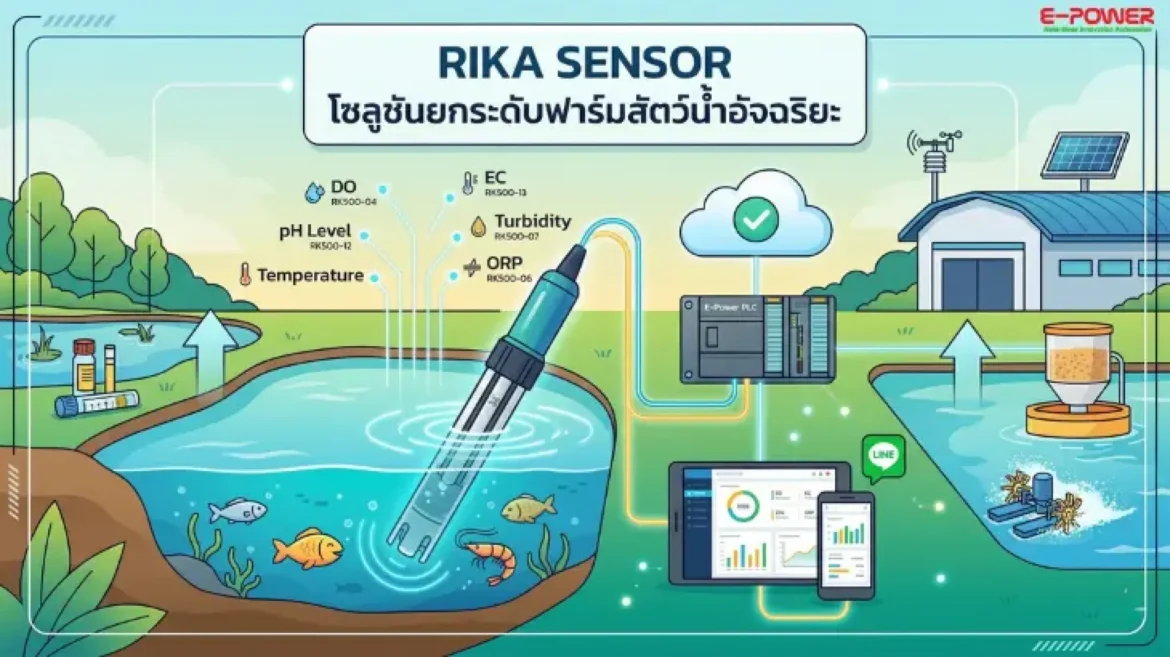
The Internet of Things (IoT) has transformed the way industries and cities monitor, control, and optimize their systems. By connecting devices to the internet, IoT enables real-time data collection, analysis, and automation. One of the critical components of any IoT ecosystem is sensors, which act as the “eyes and ears” of the system by capturing essential environmental and operational data. Among the most reliable sensors for IoT applications are Rika sensors, known for their precision, durability, and compatibility with modern digital platforms.
Rika sensors provide accurate measurements of temperature, humidity, air quality, wind speed, solar radiation, and other environmental variables, which are vital for IoT-based applications. These sensors are designed to seamlessly integrate with IoT platforms, enabling organizations to collect and analyze large volumes of data efficiently. Companies and developers rely on Rika Sensor solutions because they are compatible with wireless communication protocols, cloud platforms, and automation systems, making them ideal for real-time monitoring and intelligent decision-making.
Enabling Smart Agriculture
One of the most prominent applications of Rika sensors in IoT is in smart agriculture. By integrating sensors into IoT networks, farmers can monitor soil moisture, temperature, humidity, and light conditions in real time. This data allows precision farming practices, such as automated irrigation, fertilization, and climate control, reducing resource wastage and improving crop yields.
IoT platforms use the data collected by Rika sensors to generate actionable insights. For instance, soil sensors can trigger irrigation systems only when moisture levels drop below a certain threshold. Weather stations equipped with these sensors can alert farmers to changing climatic conditions, helping them prevent crop damage and optimize harvesting schedules. The combination of Rika sensors and IoT technology creates a highly responsive and efficient agricultural ecosystem.
Smart Cities and Urban Management
Urban environments are increasingly adopting IoT solutions to enhance public services and environmental management. Rika sensors play a vital role in smart city applications by providing accurate, real-time data on air quality, temperature, humidity, noise levels, and traffic conditions.
For example, air quality sensors can monitor levels of pollutants such as PM2.5, PM10, carbon dioxide, and nitrogen dioxide. The data collected is transmitted to city management platforms via IoT networks, enabling authorities to take timely action, such as controlling traffic or issuing public health warnings. Similarly, weather sensors help cities prepare for extreme events like storms, heavy rainfall, or heatwaves, allowing for better disaster management and urban planning.
Industrial IoT Applications
Industrial IoT (IIoT) leverages connected devices to optimize operations, enhance safety, and reduce downtime. Rika sensors are widely used in industrial settings to monitor environmental and operational conditions. They track temperature, humidity, vibration, and gas levels in factories, warehouses, and manufacturing plants.
By integrating Rika sensors into IoT systems, companies can automate responses to critical conditions. For example, if a sensor detects high humidity in a storage facility, the IoT system can activate dehumidifiers or alert operators to prevent equipment damage or product spoilage. Similarly, sensors monitoring gas leaks or air quality enhance worker safety by providing early warnings. The seamless integration of Rika sensors with industrial IoT platforms ensures continuous monitoring and intelligent decision-making.
Renewable Energy and Energy Management
IoT-enabled energy management systems rely on accurate environmental and operational data to optimize power generation and consumption. Rika sensors provide real-time data for solar, wind, and hydroelectric systems, helping operators maximize efficiency and predict energy output.
In solar power plants, irradiance sensors measure sunlight intensity, allowing systems to adjust panel orientation or detect shading issues. In wind farms, anemometers and wind direction sensors track wind patterns, enabling better turbine management. By transmitting this data through IoT networks, operators can monitor energy production remotely, schedule maintenance proactively, and optimize energy distribution across grids.
Enhancing Environmental Monitoring
Environmental monitoring is another area where Rika sensors have a significant impact on IoT-based solutions. Sensors track water quality, soil conditions, atmospheric pressure, and weather parameters. When connected to IoT platforms, this data can be analyzed in real time to detect pollution, predict floods, and support sustainable resource management.
IoT dashboards display trends and anomalies from Rika sensor data, helping environmental agencies make informed decisions. Alerts and automated responses can also be set up for critical events, such as excessive rainfall or high pollutant levels, improving both efficiency and safety.
Conclusion
Rika sensors are integral to the success of IoT-based solutions across multiple industries. By providing accurate, reliable, and real-time data, they enable smart agriculture, industrial automation, urban management, renewable energy optimization, and environmental monitoring. Their compatibility with wireless communication, cloud platforms, and IoT protocols ensures seamless integration and intelligent decision-making.
As IoT continues to expand and evolve, the role of reliable sensors like Rika sensors becomes increasingly critical. Their advanced technology supports not only data collection but also automation, predictive analytics, and sustainable operations, making them a cornerstone of modern connected solutions.