
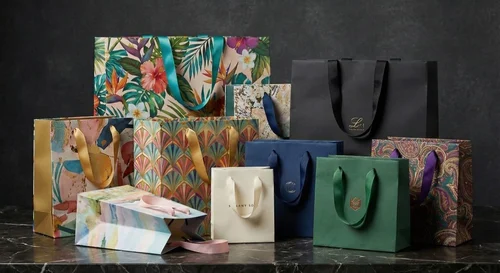
Packaging has to do more than carry a product safely. For many retailers, it also forms part of the customer experience, communicating quality and brand identity before the contents are seen. Businesses also need packaging choices that are practical to recover and recycle after use.
This is where luxury kraft paper bags can offer a useful balance. Their structured shape, printable surface and choice of finishing details can create an upmarket appearance, while a carefully specified paper-based construction can avoid some of the recycling difficulties linked with more complex packaging.
Why Kraft Paper Works for Premium Packaging
Kraft paper is often associated with simple brown carrier bags, but it can also be used in more refined packaging. A heavier paper weight, well-made folds, a reinforced base and clean printing can give a bag a substantial, considered feel without depending on a glossy surface.
Natural brown kraft creates a warm, understated look, while white kraft provides a cleaner base for artwork and brand colours. The right choice depends on the product and visual identity.
Premium presentation is not limited to shine or lamination. Good proportions, accurate printing, suitable handles and restrained finishing can make paper packaging look polished while keeping the construction relatively simple.
Recyclability Depends on the Whole Bag
Describing a bag as paper does not automatically mean every part of it can be handled in the same recycling stream. Coatings, decorative materials, handles, eyelets, adhesives and contamination can all affect what happens after use.
Uncoated kraft is generally simpler from a recycling perspective because it avoids a plastic film laminated across the paper surface. A laminated bag may still contain plenty of paper, but bonded layers can make recycling more difficult depending on the materials and local facilities.
The same principle applies to handles and decorative features. A bag designed with recyclability in mind should use compatible components where possible, or parts that can be removed easily. Businesses should also avoid broad environmental claims unless they can support them for the exact bag specification being ordered.
Choosing Finishes Without Losing the Premium Feel
A luxury appearance can come from detail rather than from adding multiple materials. Printing, embossing and debossing can create visual and tactile interest while allowing the kraft surface to remain central to the design. Foil or varnish may also be considered, but their effect on recyclability should be checked before approval.
For many brands, the most effective design is selective. A strong logo, carefully chosen colours and good spacing can look more refined than a bag covered with finishes. Interior printing can also add interest without changing the outward simplicity.
When specifying luxury kraft paper bags, it is worth treating presentation and end-of-life handling as part of the same design decision. Asking how each finish, handle and reinforcement affects recycling can prevent an attractive bag from becoming unnecessarily complicated to process later.
Practical Factors to Check Before Ordering
A bag should be designed around its actual use rather than appearance alone. Before approving a specification, consider:
- Product weight: The paper, base and handle construction should suit what customers will carry.
- Bag size: Choose dimensions that fit the product without unnecessary empty space.
- Handle material: Check whether handles can remain attached during recycling or should be removed.
- Surface treatment: Ask whether coatings, films, varnishes or special finishes affect recyclability.
- Disposal guidance: If parts need separating, consider whether simple instructions should appear on the bag.
These checks also improve usability. A bag that looks premium but is awkward or oversized may create a poorer experience and use more material than needed.
Reuse Matters as Well as Recycling
Recycling is important, but it is not the only consideration. A strong, attractive carrier bag may be kept and used again before it enters the waste stream. That can extend its useful life.
Design can support reuse through comfortable handles, suitable proportions and durable construction. However, durability should still be balanced against material use. Adding unnecessary layers simply to make a bag feel heavier is not always the best approach.
The aim should be to use enough material to perform the job well while avoiding features that do not provide a clear functional or presentation benefit.
Common Design Mistakes to Avoid
One common mistake is assuming that more finishing automatically means more luxury. Too many colours, textures and decorative elements can make a bag visually busy and may introduce extra materials that complicate recycling.
Another problem is designing the artwork before deciding on the bag structure. Logo position, print area, handle placement and folds all affect the final appearance. Packaging is usually stronger visually when the artwork is planned around the physical format from the beginning.
Businesses should also be careful with environmental wording. Terms such as recyclable, recycled, plastic-free or reusable should only be used when they accurately describe the final specification. If there is uncertainty about materials, coatings or local recycling requirements, professional advice may be useful before claims are printed.
Balancing Brand Presentation With Material Simplicity
Premium packaging does not need to be complicated. A restrained kraft bag with good print quality and well-chosen details can communicate quality while keeping the material mix easier to understand.
Instead of asking how many premium effects can be added, businesses can ask which features genuinely improve appearance, function or durability. Each additional component should have a clear purpose.
In Conclusion
Luxury kraft packaging can combine a refined retail appearance with a straightforward paper-based format, but recyclability depends on more than the main material. Coatings, handles, decorative finishes, contamination and local collection rules all need to be considered when deciding how a bag should be specified and disposed of.
When choosing luxury kraft paper bags, focus first on function, material simplicity and the finishes that genuinely support the brand. Ask suppliers clear questions about each component and its end-of-life requirements, and give customers disposal guidance where necessary. This creates packaging that feels considered without relying on unnecessary complexity.