
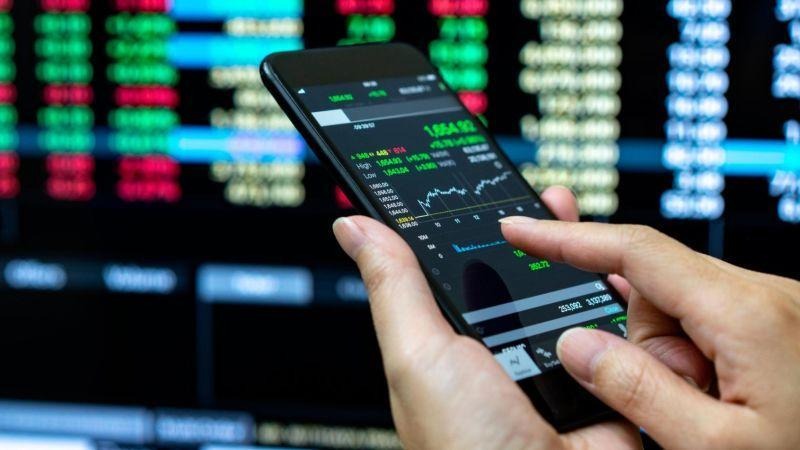
Global commodity exchanges have developed to be much more than the conventional buying and selling floors and the straightforward either buy or sell choices. Investors expect advanced technology, deep research and strategic risk advice that will turn participation in the market into an organized investment activity. Professional commodities trading brokerage services are being viewed as full-fledged financial partners, and not as brokers who take orders and execute them. These services assist traders to understand global supply cues, macroeconomic, and price behaviour using advanced digital platforms, integrated analytics, and real-time intelligence.
In a rapidly growing global commodity investment environment today, throughout the world, the worth of informed brokerage support is consistently on the increase, and the value of informed brokerage support is likely to grow very swiftly in the future.
Advanced Trading Infrastructure and Data Intelligence
The current brokerage systems are constructed on advanced digital infrastructure that aims at converting the raw market data into valuable trading information. Innovative dashboards combine immediate price feeds, past analytics, technical indicators and customizable charting systems, enabling traders to monitor patterns of multiple commodities at the same time. Instead of using an external software only to check volatility trends, contract movements, and correlation behaviour, investors are able to check these behaviours in their own trading context. The efficiency is also improved with the help of automation tools, which provide the possibility to receive alerts, algorithmic triggers, and portfolio monitoring systems that react immediately to predefined market conditions. This is an information technology architecture which lowers the informational delays and promotes quicker and more assured decision-making.
With commodity markets being responsive to geopolitical events, commodity supply changes, and currency fluctuations, online brokerage services are now the much-needed analytical workstations in which traders turn market complexity into systematic trading plans with quantifiable discipline and clarity in the changing global commodity surroundings each trading session globally today, allowing professionals to work analytically.
Strategic Market Research and Professional Advisory
Another characteristic that has developed in the more modern-day commodities trading brokerage services is the advisory capabilities of the professionals. The role taken by these firms no longer involves the execution of client instructions, but instead offers formatted market interpretation and strategic views based on the experience of the analysts and research networks globally. Investors have been given explanations on supply disruptions, production cycles, regulatory policies and international demand trends that influence the prices of commodities through detailed reports, webinars and continuous commentary. This kind of contextual awareness enables traders to stop speculative speculation and make disciplined positions in accordance with the reality of the wider economy. The provision of advisory support also aids the investors to make interpretations of technical signals and macroeconomic indicators in unison and not independently.
Through insights and guidance of research and through practical trading advice, brokerage professionals assist clients to appraise opportunity windows, volatility cycles, and build informed strategies based on reasonable intelligence as opposed to emotion-based decision making in complex commodity markets around the world to date, facilitating the consistent confidence in the analytical basis of the traders and investment teams alike.
Integrated Risk Management Frameworks
Risk management has been a major part of the contemporary brokerage ecosystem due to the fact that commodity markets tend to have sudden price fluctuations as a result of a political change, weather conditions, or unexpected supply shocks. Modern trading platforms, thus, incorporate systematic protection features in their platforms, allowing traders to control exposure in a systematic and as opposed to a reactive manner. Stop-loss parameters, margin monitoring and position calculators are tools which enable investors to establish expected levels of risk before they go into a trade. Portfolio dashboards also show the interaction of individual commodity holdings with the larger investment exposure, assisting the traders to be balanced across commodities in sectors like the metals, agriculture, and energy industries. Scenario modelling can also estimate the possible profit and loss in various market conditions.
The role of brokerage technology in promoting responsible investor behaviour by instilling risk consciousness in the everyday trading operations promotes disciplined behaviour to ensure that the pursuit of opportunities is not in conflict with financial soundness and long-term retention of capital in volatile commodity markets around the world today, thus contributing to the responsible actions of investor participants.
Investor Education and Knowledge Ecosystems
Learning and ongoing skills improvement are being integrated into brokerage systems as companies acknowledge that educated traders can bring good health to market behaviour. Learning portals today will often contain structured programs, interactive tutorials, and market simulators intended to teach derivative contracts, the margin, pricing model, and trading psychology. Educational materials do not confuse beginners with technical terms, but rather break down complicated mechanics around commodities and render them into real-life frameworks with practical application that can be used in the decision-making process by the investor. Market specialists are regularly featured in webinars that usually examine the current trends in prices and how economic conditions affect various commodities in various industries. This continuous, knowledge assistance builds confidence in the traders and instills in them a thought process instead of acting on their impulse to respond to the fluctuations in the short term.
Through the combination of education and trading technology, the brokerage platforms form a more knowledgeable investor base that can approach commodity markets with systematic plans, systematic research practices and a higher level of long-term market awareness across the global trading systems today that can contribute to the creation of smarter investors.
Conclusion
This process of the development of the world commodity markets has turned the brokerage firms that were merely the facilitators of the transactions into the providers of the strategic infrastructure that contributes to informed investment participation. Nowadays, traders need not just an exchange; their requirements include analytics, education, research, and disciplined risk systems transforming multifaceted information into strategies that can be acted upon. This change is of great importance to investors dealing with commodities trading in India, where an increasing number of people are taking part in the market and where regulatory bodies are asking for a higher level of transparency and professional assistance.
Investors seeking a structured gateway into advanced commodity market participation often explore solutions designed around transparency, research depth, and technological precision, such as those offered by Flow FX, which supports traders pursuing disciplined strategies across evolving commodity investment landscapes worldwide today with informed confidence and strategic clarity in every trading decision.