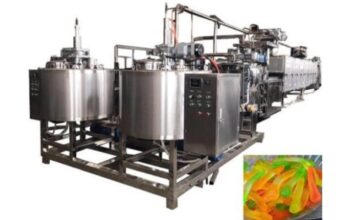
Gummy candies are among the most popular confectionery products worldwide, enjoyed by consumers of all ages. Their chewy texture, vibrant colors, and variety of flavors make them a favorite snack. Producing gummy candies efficiently and consistently requires a well-organized production line equipped with advanced machinery. A modern Gummy Candy Production Line automates the entire process from raw ingredient handling to packaging, ensuring high-quality output while minimizing waste and labor costs. Understanding the step-by-step process of a gummy candy production line provides insight into how these delicious treats are manufactured on a commercial scale.
A gummy candy production line integrates multiple stages, each designed to perform a specific function with precision. These stages include ingredient preparation, cooking, molding, cooling, finishing, and packaging. Each step is critical to achieving the desired taste, texture, shape, and appearance of the final product. Automation and precise control throughout the production line ensure consistent results, making it possible to produce large volumes of gummy candies efficiently.
Step 1: Ingredient Preparation and Mixing
The first step in the gummy candy production process involves the preparation of raw ingredients. Sugar, glucose syrup, water, gelatin or other gelling agents, flavors, colors, and optional additives are measured accurately according to the recipe.
Automated mixers combine these ingredients into a homogeneous solution. The mixing stage is critical, as uneven blending can lead to inconsistencies in texture, flavor, and color. Advanced production lines use precise dosing systems to ensure each batch is uniform, which is essential for maintaining product quality across large volumes.
Step 2: Cooking and Gelatin Activation
After mixing, the gummy mixture is transferred to large cookers. Cooking is an essential stage that dissolves the ingredients completely and activates the gelling agents. Temperature control is crucial during this step; undercooking can result in gummy candies that are too soft, while overcooking can make them hard or brittle.
Modern production lines feature automated cooking systems that maintain uniform heat distribution and continuous stirring. These systems improve efficiency, reduce human error, and ensure that the mixture reaches the optimal consistency required for molding.
Step 3: Depositing and Molding
Once the mixture has reached the correct temperature and consistency, it is transferred to depositing machines. Depositors fill molds with precise amounts of gummy mixture to form the desired shapes and sizes.
Multi-head depositing machines are commonly used in large-scale operations, allowing for high output and consistent portioning. Interchangeable molds enable manufacturers to produce various shapes, from traditional bears and fruits to custom promotional designs. Accurate depositing reduces material waste and ensures that each gummy candy has uniform weight and appearance.
Step 4: Cooling and Setting
After molding, the gummy candies must cool and set properly. Cooling tunnels or chambers provide controlled temperature and airflow, allowing the gummies to solidify while retaining their chewy texture.
Uniform cooling is essential to prevent deformation, sticking, or uneven setting. Automated cooling systems ensure that each gummy candy maintains its shape, texture, and structural integrity. Proper cooling also facilitates subsequent handling, finishing, and packaging stages.
Step 5: Finishing and Coating
Finishing is the stage where gummy candies are enhanced with coatings, flavors, or decorative elements. Common finishing processes include applying sugar coatings, wax layers, or acid-based finishes. These finishes improve the candies’ taste, appearance, and shelf life.
Automated coating drums and polishing machines provide uniform application, reducing manual labor and minimizing material waste. Coating systems can also incorporate functional ingredients, such as vitamins or natural flavors, to create specialty products.
Step 6: Quality Control
Quality control is integrated throughout the gummy candy production line. Sensors and automated monitoring systems track critical parameters, such as temperature, viscosity, and mold filling levels. These systems detect deviations in real-time, allowing operators to make adjustments and prevent defective batches.
Regular quality checks ensure that the final gummy candies meet standards for texture, flavor, color, and appearance. Maintaining consistent quality is essential for customer satisfaction and brand reputation.
Step 7: Packaging
The final stage of the production line is packaging. Automated packaging machines fill, seal, and label the gummy candies efficiently. Packaging options vary from bulk bags to portion-controlled pouches, depending on market requirements.
Integrating packaging with the production line ensures a smooth transition from finishing to final product handling. Automated systems reduce labor requirements, minimize contamination risks, and maintain the hygienic standards necessary for food production.
Conclusion
A gummy candy production line is a highly coordinated system that combines precision, automation, and quality control to produce consistent, high-quality gummy candies. From ingredient preparation and mixing to cooking, molding, cooling, finishing, and packaging, each stage plays a critical role in delivering the final product to consumers.
By investing in modern production equipment, manufacturers can increase efficiency, reduce labor costs, minimize waste, and maintain uniformity in taste, texture, and appearance. Understanding the step-by-step process of a gummy candy production line highlights the importance of advanced machinery in meeting consumer demand and sustaining growth in the competitive confectionery market.